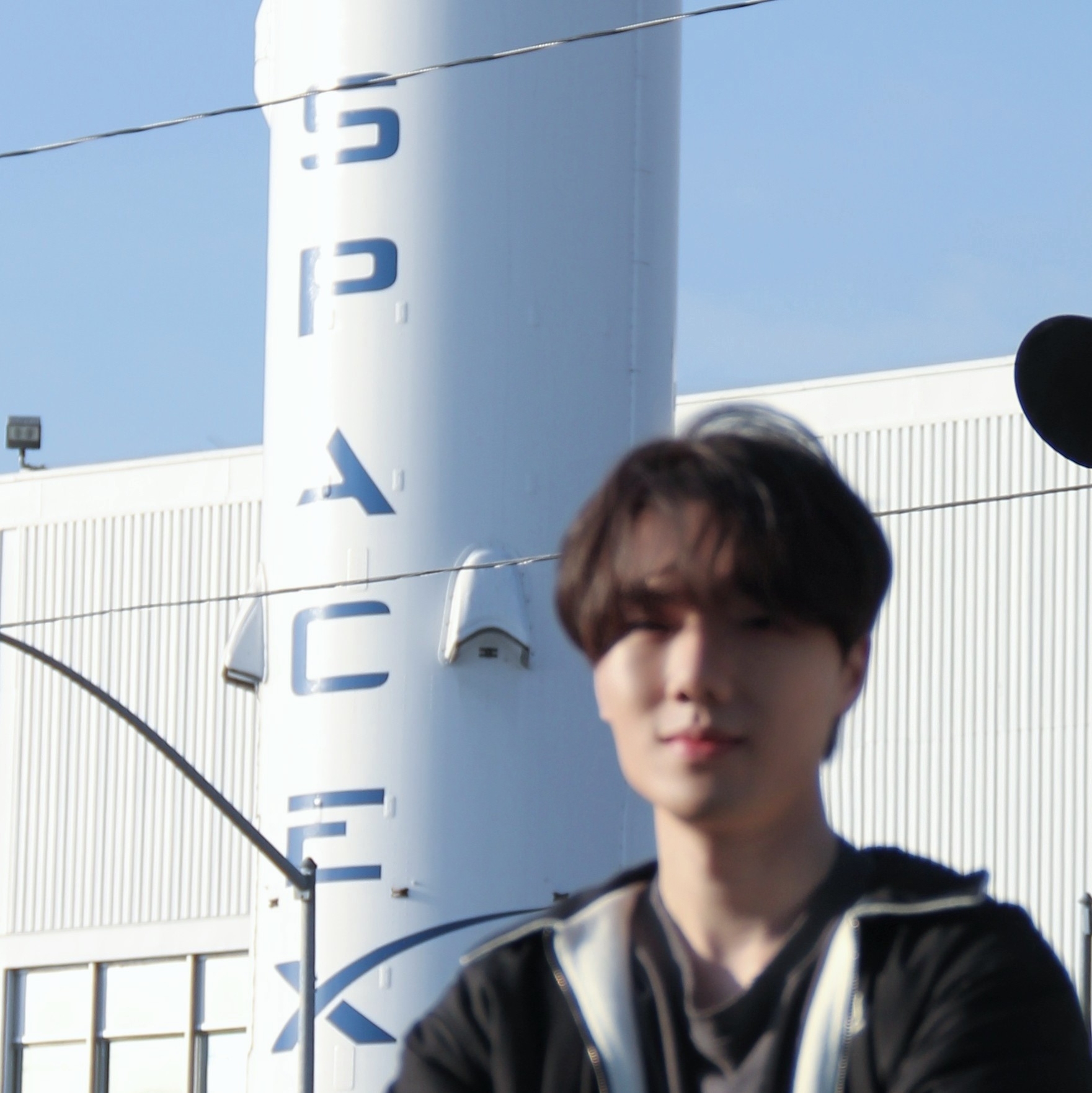
Zizhao Hu
Los AngelesAI PhD @ University of Southern California · zizhaoh@usc.edu
advised by Jesse Thomason @ Georgia Tech & Mohammad Rostami @ Amazon
I'm a researcher and engineer on Agentic AI. I work on agentic memory (continual learning, unlearning, memory consolidation through synthetic data model training).
I earned my BS in Physics at Georgia Tech and am now an AI PhD at USC, in the GLAMOR Lab.
I'm conducting LLM unlearning research for the US Government's IARPA, working with Robin Jia. Previously I was an ML domain lead at Handshake AI and a data engineer at Scale AI, where I collaborated with teams from OpenAI, Meta, and Anthropic to improve their unreleased black-box models.
Outside research I do K-pop dance covers, play intramural soccer, and spend downtime on competitive strategy games, anime, and movies.
what i work on
Agentic Memory
Continual learning of AI agents: in-context learning, continual fine-tuning, unlearning, and memory consolidation for adaptation.
Self-Improving AI
Models that get better from their own output, through synthetic data, test-time training, on-policy distillation, and in-context RL.
AI Alignment
Post-training personalization, safety, and interpretability, so that capable models stay legible and controllable for the people who use them.
news & media
6- conferenceSHRED (SHRED: Retain-Set-Free Unlearning via Self-Distillation with Logit Demotion) accepted to NeurIPS 2026
- awardPRISM (Expert Personas Improve LLM Alignment but Damage Accuracy: Bootstrapping Intent-Based Persona Routing with PRISM) nominated for Best Paper at EMNLP 2026
- preprintSHRED (SHRED: Retain-Set-Free Unlearning via Self-Distillation with Logit Demotion) preprint on arXiv
- preprintPRISM (Expert Personas Improve LLM Alignment but Damage Accuracy: Bootstrapping Intent-Based Persona Routing with PRISM) preprint on arXiv
- coveragePRISM (Expert Personas Improve LLM Alignment but Damage Accuracy: Bootstrapping Intent-Based Persona Routing with PRISM) in the press: The Register, 36Kr and more
- fellowshipWrapped up Project Canary







my path
- Physicsphotonics, metasurfaces, dynamic systems
- Agile Systemsbio-inspired flight & sensing
- Robotics · RLpolicy learning for physical control
- Continual Learning · VAEregularization design for VAEs
- Multimodal Generationdiffusion models & VLM architecture
- Agentic Memoryin-context learning, unlearning, memory scaffolds
- System 1 Modelsfast, intuitive models that act in real time
- World Modelspredictive models of how the world changes
- Agentic AI Governancelaws, courts and enforcement for autonomous agents
collaborators